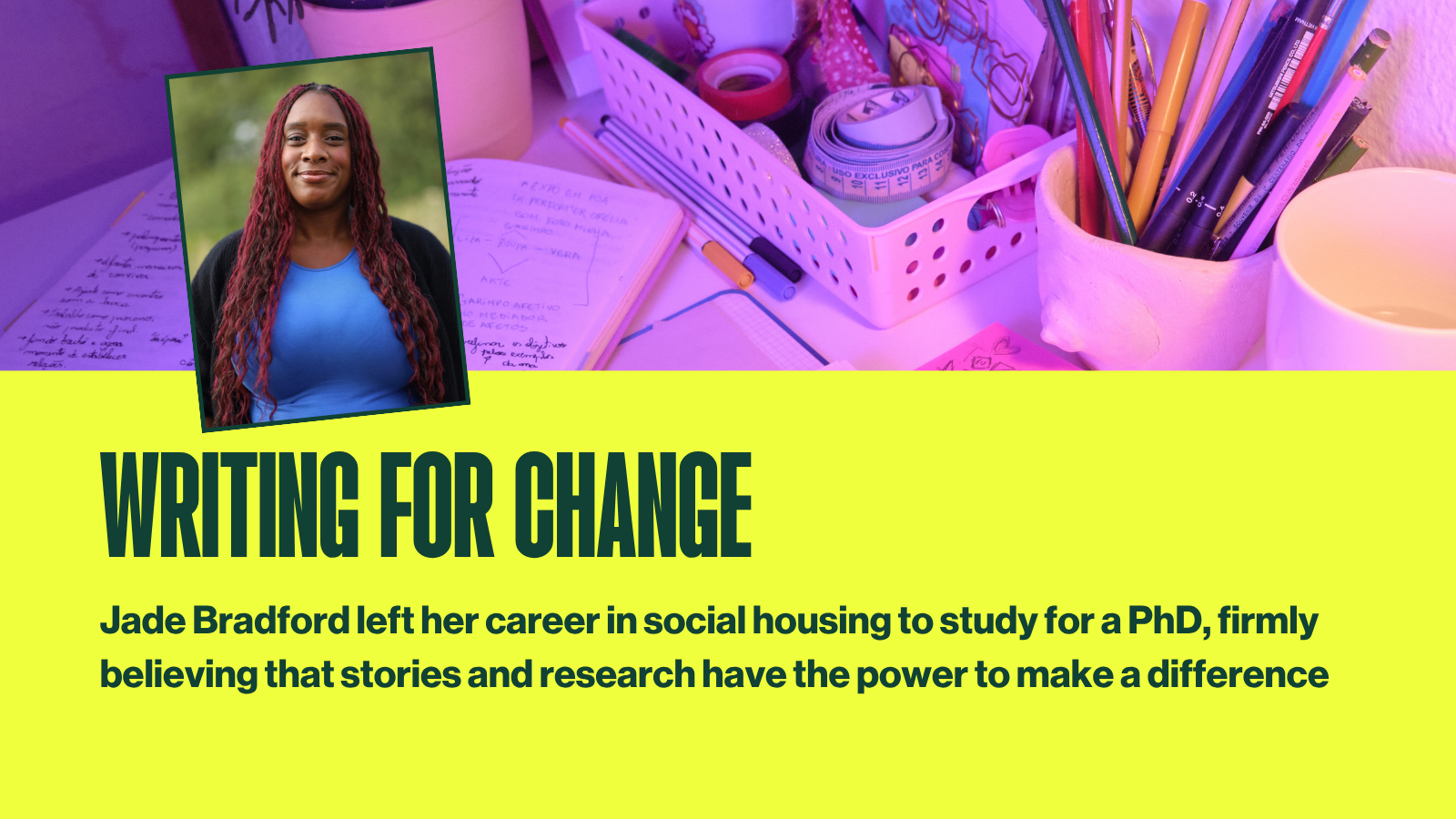
Last year, in what I have been describing as a “midlife realignment”, I put in one, tentative application for a PhD in Creative Writing. It wasn’t an insignificant choice to make. I had a long-established career running the customer communications and engagement team at a massive social housing provider. Taking on the PhD would mean returning to academia a full 15 years after I left it. I’d be halving my income, halting my career progression, not paying into my pension at a time I should really be planning for old age.
But after nearly two decades and a series of significant housing tragedies, including the fire at Grenfell Tower and the death of Awaab Ishak from damp and mould in his social home, I couldn’t ignore the thing gnawing at my soul.
Rot had set in throughout the sector, and I wanted to be doing more to eradicate it. I was seeing, as many of us are, the rise of old problems creeping back in. The diversity of leadership teams, once on an upward trajectory, was regressing. Sector reporting on the ethnicity pay gap showed trends of Black women getting stuck in middle management whilst their peers progressed, and I was very much one of them. Incidents of hate crime in communities were increasing. As a race equality network chair, I was hearing stories of providers backtracking on EDI commitments.
My role, focused on the needs and wants of residents, had its limits. If asked, I had a neat little spiel about what my team did. Our role was to ensure people have influence on the way their services are run and that they have the information they need to manage their home and tenancy and thrive in their community. Our job wasn’t just to ask people things, or tell them things, it was to do it in a way that actually added value to their lives.
I believe there are tens of thousands of housing association and council staff who are trying their best, but our fractured efforts aren’t going to lead to collective improvement. In housing associations all across the UK, staff and customers have great ideas for improving housing and communities, but if it doesn’t align with the operating model, social housing regulation or broader legislation, then it cannot be done. So we end up making piecemeal changes, bolting on solutions to imperfect systems rather than building something new that works. With a can do spirit comes frequent heartbreak. When you feel you can’t deliver the service your customers deserve, it’s devastating.
So I started to ask myself, how can I make change, actual change? My number one skill is and always has been the written word. So how could I make words mend housing?
"If you’re thinking about getting into any kind of writing; journalism, research, creative writing, remember this one thing: You belong there. Don’t let anyone tell you that you don’t."
Writer
There’s lots of evidence that suggests that the stigma around social housing and “council estates” negatively impacts the lives and outcomes of people living in it. Think about the representations you see in the media. Are you seeing balanced communities with many different kinds of people, or is it one-dimensional shows like Benefits Street? The way people talk about social housing doesn’t match up with our many and varied experiences of actually being in social housing. The evidence is all there, plain as day: anecdotal, academic, lived experience, professional expertise, in thousands of books. Every single day a major news outlet publishes an article about something awful that’s happening to a social housing tenant. So why don’t more people care?
My research, then, looks at how we can use creative writing to tackle social housing stigma, raise awareness and get more people to care. There are dozens of examples of how this has worked in the past, but look at a couple of recent examples – things like Mr Bates vs the Post Office or Adolescence. They weren’t just things people talked about at home. They got extensive media coverage that attracted the attention of institutions, of governing bodies. They were discussed in parliament. They sparked awareness and change almost instantly. But they were not the first people to tell us about the Post Office Horizon scandal, nor the manosphere. So I want to understand, why does it so often take a piece of art to get our attention, and how can I bottle this and get more people to be outraged about the wide-ranging impacts of a sustained housing crisis?
Every single person has a role in making social change, and what that looks like is up to you. You don’t have to be a CEO, or the prime minister or have achieved a global audience like Greta Thunberg. You don’t have to be wildly privileged or connected or know someone who knows someone. Doing what you can with the resources and energy you have available to you is enough.
If you’re thinking about getting into any kind of writing; journalism, research, creative writing, remember this one thing: You belong there. Don’t let anyone tell you that you don’t. Sometimes as marginalised folks, when the stigma about our communities tells others that we’re not built to succeed, our default is to think that we won’t be welcomed into new spaces. That feeling is more present than ever this year. But please believe me when I say there are people breaking down doors for us everywhere, and I’ve experienced this more in Wales than anywhere else. You deserve to feel included. Your role isn’t to turn up to an institution that makes you miserable and simply suffer your way through. You can have better. And you’re allowed to ask for help. You’d be surprised how many people will be willing to give you a little bit of their time.
We all have a part to play in making the change we want both locally and globally. I see a lot of rhetoric on social media that says if you’re not posting about certain issues, you’re not part of the solution. But it’s just not true. There are lots of (arguably more) useful ways you can make social change. If you’re not afraid of difficult conversations, just changing the mind of one person could have a ripple effect that stops the spread of fascism in your tiny corner of the world. If you’re great with people, you could look into community organising, improving the collective bargaining power of your local area. Asking probing questions, being savvy about fact checking, understanding media agendas and learning more about the issues we’re facing today and how they are all interconnected are the most powerful things you can do.
I’m driven by a simple thing. I strongly believe every single person deserves somewhere decent to live, no matter how much money they have, who they are or where they’ve come from. No one should have to worry if their home is safe or if the quality of the air in their neighbourhood is going to kill them or the people they love. Nobody should feel like they won’t be offered a job because of their postcode. Social housing will always be my home, even if I no longer work in the sector. My role now is to look up at it from the kerb and figure out what renovations it needs, using stories and research as my tools.
Jade E. Bradford is a writer, communicator and PhD student based in Barry, South Wales. You can follow her on LinkedIn, Instagram or Substack.


